



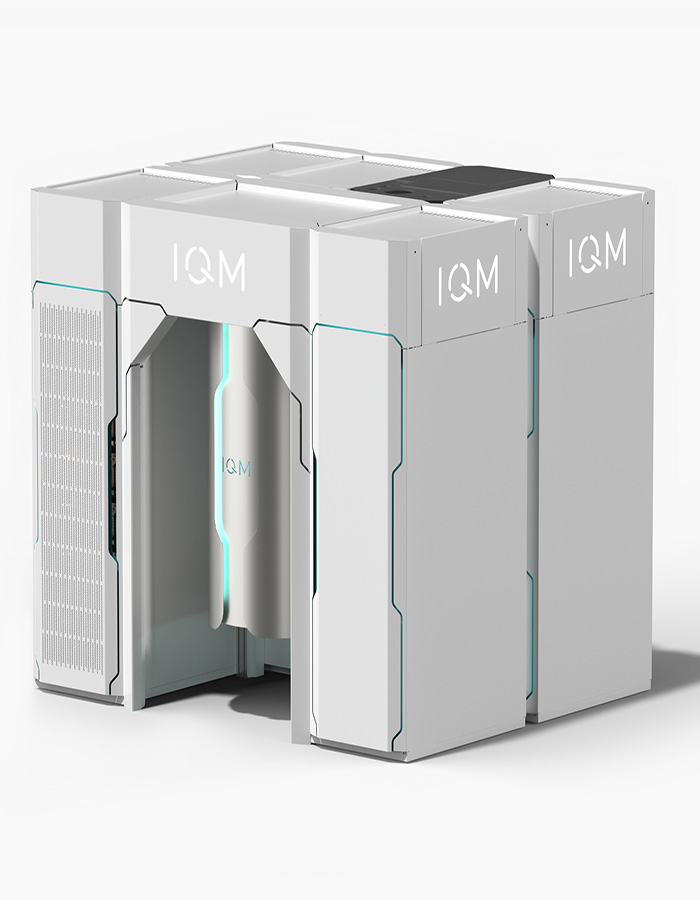
This week the Latestsale.com Founder reviews the IQM “From Theory to Quantum Reality 3D Diffusion on a Superconducting Chip” webinar that took place on 11th September 2025. This insightful IQM meet up gave attendees a deep dive into the IQM 3D Superconducting chip. Moderated by Helsinki based Rubica Bhowmick IQM Marketing and Business Intelligence Manager, we were treated to high profile leaders in the quantum space including Hermanni Heimonen, IQM Head of Product and William Steadman Quantum Software Developer at Quanscient.
Billed as the “world’s first 3D advection-diffusion simulation on a superconducting quantum processor,” we discovered how “Quanscient’s Quantum Lattice Boltzmann Method (QLBM), runs on IQM’s 54-qubit Emerald chip,” achieving spectacular results demonstrated by the simulation of contaminant diffusion in water, that reflects the principal steps the quantum industry needs to take to attain practical quantum-enhanced engineering.
We dug deep into a range of industry subjects including advances in circuit optimization, error mitigation, examined alongside use cases in the aerospace and energy sectors deploying fidelity enabled hardware to generate more precise simulations.
IQM TEAM HIGHLIGHTS $320M INVESTMENT ROUND
The IQM “From Theory to Quantum Reality: 3D Diffusion on a Superconducting Chip” webinar duo included Hermanni Heimonen, Head of Product at IQM Quantum Computers, where he leads the product development and commercialization of quantum computers. With a Ph.D. in Quantum Physics from the National University of Singapore, his background spans quantum hardware, algorithms, and system co-design. Today, his mission is to raise awareness of the joys of quantum computers across the globe, bringing about an era of emerging deeptech technologies.
William Steadman, Quantum Software Developer at Quanscient who studied Mathematics at MIT and has worked for over a decade in mathematical modelling for a range of sectors from train scheduling to energy forecasting and most recently quantum optimal control also joined us. At Quanscient, Steadman has worked to propel Quanscient’s quantum algorithms into operation through specialized hardware and software integration.
Head of Product for IQM, Hermanni Heimonen unveiled the technical roadmap for quantum error correction, aligned with his thesis on quantum theory and algorithms. Heimonen who is currently based in IQM Finland, enjoys a PhD in Quantum Physics, and has oversight over the commercialization of quantum computers into industry.
With this in mind, Heimonen praised the next critical milestones achieved in the company’s development thanks to a $300M+ Series B raise in IQM as announced on 3rd September 2025. Representing the largest Series B raise of all time in the quantum space, both in Europe and outside of the USA, the $320 Million (€275 Million) in venture capital, brings the total IQM funding raised to date to $600 Million and was led by U.S. Investor Ten Eleven Ventures with continued backing from Finnish investor Tesi and multiple investment operators.
Dr. Jan Goetz, Co-Founder and Co-CEO of IQM Quantum Computers with HQ in Espoo, Finland commented; “This funding round will fuel our company growth, with an accelerated tech roadmap towards error corrected systems from thousands to millions of qubits. We also focus on strong business expansion in the U.S. and other global markets based on our attractive on-premises offerings for quantum computers and the recently announced upgrade of our cloud offering.” Goetz, continued: “The addition of Ten Eleven as our first U.S.-based investor is a catalytic event for IQM and finding the right venture partner in the U.S.—one that could help us scale our technology and deliver value to our partners and customers—was essential.”
Alongside Ten Eleven and existing Finnish venture capital and private equity company Tesi, the $320M funding round was closed alongside additional pension fund participants Elo Mutual Pension Insurance and Varma Mutual Pension Insurance, as well as strategic investors Companies of Schwarz Group and Winbond Electronics Corporation, and sovereign wealth funds EIC and Bayern Kapital.
HPC QUANTUM INTEGRATION DYNAMISM
Hailing HPC (High Performance Computing) Integration (the combination of quantum and classical high-performance computing to solve problems that are too complex for either system alone) as the next steps in the industry’s evolution, Hermanni Heimonen Head of Product for IQM, championed overall performance outlined as KPIs that should be measured by the rate of fidelity generated for logical qubits.
The enigma of a fault tolerant computer stack was promised to be the next best-in-class development of quantum computing within the core IQM product development cycle thanks to IQM’s August 2025 testing results, that recorded high levels of fidelities.
The HPC approach is also supported by U.S. Naval Academy Naval Architecture degree holder, Duke University MBA graduate, and U.S. Naval Nuclear Propulsion qualified nuclear engineering officer Earon Rein. Rein, who also acts as Director of Corporate Development at Quantum Machines heads up the company’s efforts to evaluate new regions for quantum growth.
HPC integration is destined to facilitate the seamless management of large workflows and quantum computers pushing forward to optimize specific tasks more quickly and efficiently, either through an iterative or sequential hybrid approach. Barriers to integration such as hardware standardization can be set aside thanks to IQM’s commitment to rolling out quantum computers that work alongside even the most esoteric software options, thus creating the following advantages:
- Iterative: Continuous computational exchanges between the quantum computer and the HPC system is impacted by variational algorithms in pilot. These instances enable the quantum computer to be referred to for trials that can then be perfected by the HPC infrastructure.
- Sequential: With more intensity, specific tasks can be offloaded to the quantum computer, whilst maintaining the larger workflow deployed for the HPC system. For example, a quantum computer could be utilized only for calculations of states and particles such as electrons held in their most stable state. This configuration enjoys greatly reduced energy and orbital level outputs, a position most commonly referred to as a ground or stationary state of a molecule. In this manner, once the complex tasks have been calculated via the quantum computer, the final solution or output is processed on the HPC.
In summary, in order to deliver a superlative result for Quantum chemistry outputs, the IQM ecosystem combines the benefits of classical computation alongside quantum computing.
The IQM integrated stack could work as follows:
SOFTWARE PLATFORM (HCP integration)
QUANTUM COMPUTER— high complexity with low volume of data fields PLUS
CLASSICAL COMPUTER—problems to be solved parallelised for big data calculations
OPTIMIZING LOGICAL QUBITS THROUGH Quantum Lattice Boltzmann (QLBM)
The IQM team has referenced the TILE CODE concept as a realistic way to generate 12 x more efficiency than surface code (logical qubits). This results in overall high efficiency code achieved in lattice mode.
IQM Resonance hardware access for researchers, combines 2 x topologies named CRYSTAL and STAR. The Electron Quantum- Superconducting Loops and Controlled Spin variations generate the following outputs in order to maximize high connectivity and a full parallelism, with all factors critical for error correction work;
CRYSTAL— delivers simultaneous algorithm compression
STAR— presents long range connectivity, one operation at a time
QSCI FIDELITIES STREAMLINED
The panel discussed the importance of defining a robust simulation method for quantum chemistry by creating infrastructure that is automated.
As also proposed by Cornell University authors Keita Kanno, Masaya Kohda, Ryosuke Imai, Sho Koh, Kosuke Mitarai, Wataru Mizukami, and Yuya O. Nakagawa, the Quantum-Selected Configuration Interaction (QSCI): classical diagonalization of Hamiltonians in subspaces selected by quantum computers has been explored in detail.
The quantum-selected configuration interaction (QSCI), is described as “a class of hybrid quantum-classical algorithms can be used to calculate the ground- and excited-state energies of many-electron Hamiltonians on noisy quantum devices.”
The authors further confirmed, “We verified our proposal by numerical simulations, and demonstrated it on a quantum device for an 8-qubit molecular Hamiltonian. The proposed algorithms are potentially feasible to tackle some challenging molecules by exploiting quantum devices with several tens of qubits, assisted by high-performance classical computing resources for diagonalization.”
In summary, the above methodology enabled the IQM team to complete testing successfully by running QSCI with less than 50 lines of code whilst instituting three lines of fidelities simultaneously.
QUANTUM LATTICE BOLTZMANN METHODOLOGY
William Steadman an Operations Research expert, historically associated with Deutsche Bahn and currently Quantum Software Developer for QUANSCIENT https://quanscient.com/, a rapid, scalable, and flexible multiphysics simulation software provider, encouraged attendees to obtain the full benefits of cloud computing by adopting a comprehensive multiphysics simulation solution approach in the browser itself. Steadman, whose credentials include a degree in Mathematics from MIT, is especially passionate about energy forecasting, and facilitating optimal quantum control, with these principles applied to the mechanics capable of stimulating the reduction in fuel costs that push encoding of aircraft simulation to new heights.
This principal of practical multiphysics application was also highlighted by Quanscient Chief Scientist, Dr. Valtteri Lahtinen, who explained in a separate forum that his team’s CFD Quantum Algorithm research began with the Quantum Lattice Boltzmann methodology for quantum computing in 2022, that almost guaranteed an element of quantum advantage, thanks to Quanscient algorithms that enables every qubit to be added to the lattice, unlike classic procedures. Real life use cases were unveiled predominantly from aircraft examples and aerodynamics used in the automotive industry showcasing how the
Lattice concept determines that unlike in classical computers, data fields have the propensity to expand at elevated levels through Quantum Lattice Boltzmann principles.
The output from deploying Quantum Lattice Boltzmann methodology when developing algorithms was further highlighted by six authors, L. Axner, J. Bernsdorf, T. Zeiser c, P. Lammers, J. Linxweiler, A.G. Hoekstra, in the following paper:
“Performance Evaluation of a Parallel Sparse Lattice Boltzmann Solver” as reported in the Journal of Computational Physics, Volume 277, Issue 10, Pages 4895-4911, initially published on 1st May 2008. The Lattice Boltzmann solver showcases how an Intermediate scale can be generated via a computational lattice grid that represents a flow (not particles).
Quanscient Quantum Software Developer, William Steadman defines the use of these principles as clearly visible in aerodynamic cases that measure turbulence and boundary conditions as follows:
COLLISION— STEP= more rapid, fluid movement
STREAMING—STEP= more rapid, fluid movement
Choosing the Lattice approach, generates the following IQM and Quanscient benefits, summarized as follows:
- QPU scaling and understanding hardware types present the most optimal environment for effective build.
- Noise reduction, often defined as a key cause of inaccurate data flows.
- Performance optimization ensures error free information from data fields is gathered even when noise is not entirely filtered out.
William Steadman Quanscient Quantum Software Developer confirmed IQM API availability and access to IQM Resonance cloud computing, “a fully managed quantum cloud service with the latest processors and hardware for easy quantum access for enterprises and academia.” Research testing parameters are expected to host the following outputs:
- Evaluate build structure and software
- Facilitate application, quantum software and algorithm development
- Generate new ideas to explore at pace
- Offload to super computer mode whilst defining the core elements to deploy.
CELEBRATING QUANTUM ADVANTAGE WITH IQM RADIANCE: THE ON-PREMISES INSTALLATION APPROACH
IQM also reported it would install IQM Radiance, the 20-qubit upgradeable full stack superconducting quantum computer at the US Department of Energy’s Oak Ridge National Laboratory (ORNL) by Q3 2025. Fully integrated with ORNL’s high-performance computing (HPC) systems, the IQM Radiance build is designed to advance hybrid quantum-classical application development.
Images ©IQM