


As Latestsale.com continues what has been bumper coverage of its 2025 Social Impact Media Partnership with the Association for Enterprise Opportunity (AEO), we reach the last three months of coverage for 2025, by showcasing the “Building Our Future: Policy and Practice for Latino Business Growth” webinar that took place on Tuesday September 30, 2025. In attendance, the Latestsale.com Founder alongside, Bria Marie Hodge (Moderator) and Director of the Latino Economic Development Center, Maria Bilonick, President & CEO of the National Association for Latino Community Asset Builders, CEO of Acción Opportunity Fund, Luz Urrutia, Prospera USA President & CEO Augusto Sanabria, Natalie Madeira Cofield, President & CEO of the Association for Enterprise Opportunity (AEO) and Dr. Lori Smith, AEO Senior Research Advisor.
HISPANIC HERITAGE MONTH 2025 EXPLORES EQUITY STRUCTURES IN FINANCE
Latino entrepreneurs are among the fastest-growing forces in the U.S. economy, launching businesses at rates that outpace the national average, while creating meaningful jobs across the nation. Yet systemic barriers, including limited access to capital and culturally relevant support, can restrict their ability to grow.
Latestsale.com celebrated the Hispanic Heritage Month 2025 alongside the Association for Enterprise Opportunity (the AEO), the leading Washington D.C. based voice for small U.S. businesses. The AEO’s “Equity and Opportunity for All” webinar edition examined new research into Latino business ownership and explored ways to translate findings into action.
BUSINESS LEADERS AND ENTREPRENEURS DISCUSS LATINO COMPETITIVENESS
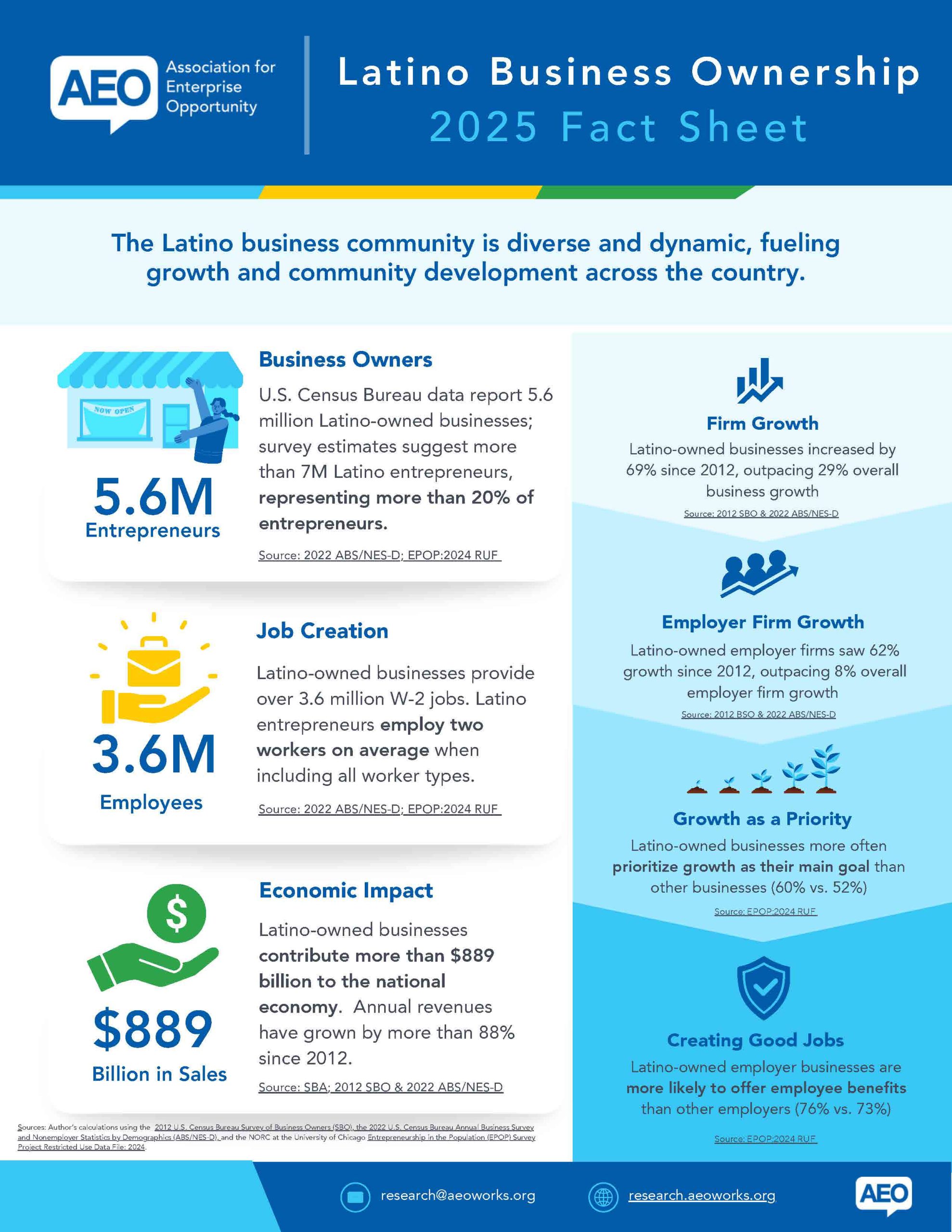
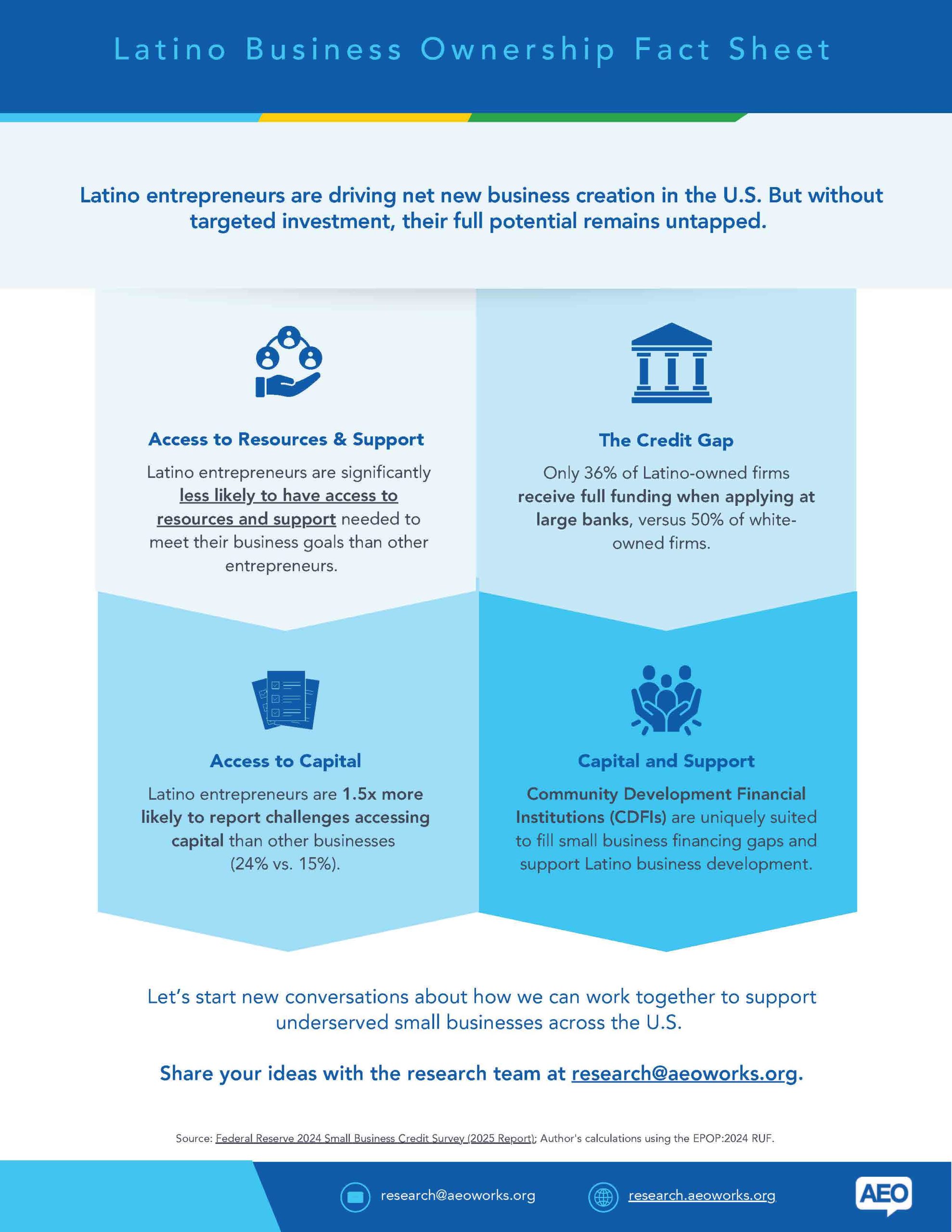
New research from Dr. Lori Smith, AEO Senior Research Advisor highlighted in the 2025 Latino-Owned Business Fact Sheet demonstrates the scale of Latino entrepreneurship and strategies that promise to expand opportunity. The discussion brought together leaders and practitioners to consider how entrepreneurial ecosystems improve access to capital, at the same time recognizing how Latino entrepreneurs’ cultural and economic contributions can help remove barriers. These approaches are most likely to create sustainable pathways for Latino businesses in their quest for growth and competitiveness.
SCALE AND INFLUENCE
Founded in 1991, the Association for Enterprise Opportunity under AEO President and CEO Natalie Madeira Cofield, opened the session by highlighting philanthropy’s role in elevating economic pathways and developing solutions that enable small business communities to thrive. With $1 billion in resources delivered, the AEO has helped connect U.S. entrepreneurs with tangible networks, resources, and systems designed to support progress and growth.
Madeira Cofield emphasized moving from insight to action by sparking collaboration and improving access to entrepreneurs. At the heart of this approach is the belief that new business openings can build dignity, wealth, and community wellbeing.
U.S. LATINO BUSINESS OWNERSHIP CONTINUES TO EXPAND
Dr Lori Smith’s findings unveiled how Latino business ownership continues to expand, underscoring its growing contribution to the U.S. economy. The research cited 5.6 million Latino-owned businesses, representing 20% of U.S.-based entrepreneurs, while between 2012 and 2022, the number of corporations grew 69% and revenue increased 80%. Much of this cohort is classified as small enterprises, with Latino-owned businesses also known to be a contributor to the creation of quality employment.
CDFIs STRENGTHEN ECONOMIC OPPORTUNITIES FOR LATINO ENTREPRENEURS
Despite these positive statistics, credit gaps and funding denials present barriers to Latino entrepreneurial growth. Community Development Financial Institutions (CDFIs) are mission-driven institutions that provide financial services and affordable business capital to underserved business communities and were referred to regularly during the webinar. For small enterprises, CDFIs can offer an alternative route when traditional financing is difficult to obtain, while also providing technical assistance and practical backing. By combining capital with guidance, CDFIs are suitably equipped to help entrepreneurs build sustainable businesses, create quality jobs, and strengthen economic avenues in their localities.
AFFORDABLE SMALL BUSINESS CAPITAL: THE DECISIVE GAME CHANGER
Luz Urrutia, Acción Opportunity Fund CEO, joined the seminar, championing her support for small businesses with significant growth potential. Urrutia indicated how access to flexible and affordable capital can be a decisive game changer, particularly when traditional lenders are difficult to reach. Financing that reflects a company’s business cycle can be paired with education, helping early-stage enterprise owners understand credit and make informed choices as their business endeavor develops.
Business capital attainment includes looking beyond the speed of a loan or considerations such as APR, repayment terms, total costs, and whether profits can cover fees. Luz Urrutia affirmed that transparent lending matters, as does understanding protections such as the Small Business Borrowers’ Bill of Rights. Local CDFIs and technical assistance providers are ramping up their plans for strategic, practical support, helping entrepreneurs avoid costly mistakes and predatory lenders. Credit should be viewed as a tool for building a business, not simply money on tap. In uncertain conditions, the right level of funding, trusted networks, and adaptable reinforcement can help businesses protect jobs, build wealth, and respond to changing demand while remaining prepared for future challenges.
ALIGNING STRATEGIES WITH PRIORITIES
Maria Bilonick, President & CEO of the National Association for Latino Community Asset Builders, highlighted a marked decline in Latino clients in some districts, alongside performance pressures and immigration challenges affecting some CDFIs. Bilonick noted that raising new capital can be met with obstacles when loans underperform or generate losses, placing pressure on CDFIs. She attested that watching the policy landscape was paramount, with an overview of SBA groups that shape the environment in which CDFIs operate essential. Aligning strategies with the priorities of the current administration, while considering needs, will become increasingly pivotal as organizations navigate hurdles she concluded.
CLOSER TIES AS CDFIs TAKE CENTER STAGE
In summary, Augusto Sanabria, President & CEO of Prospera USA, the nonprofit organization that specializes in providing bilingual assistance to Hispanic entrepreneurs, attested that starting a business is only the beginning; Latino entrepreneurs also need the support, resources, and connections required to scale and build wealth. With the AEO’s 35-year history unfolding, we celebrate a thriving ecosystem dedicated to supporting small businesses at every stage of their journey. Closer ties that ensure initial CDFI assistance, alongside startup accelerators and trusted community partners are underway.
Whilst many businesses move online, it was noted that restaurants also saw digital traffic rise from 5–10% to 70%, while social media became increasingly important for revenue, Marketing programs, and customer communication. Some restaurant owners now operate with a greater reliance on new business generated thanks to higher levels of phone orders registered,. Virtual assistance has also become essential together with one-to-one guidance.
Responsible credit practices and financial tools are the key to success for Latino entrepreneurs seeking new ways to build credit and avoid predatory lenders. With policy and programs changing, Latino business owners require adaptable tools and opportunities to compete on an equal footing. No single solution will work for everyone; collaboration, trust, and partnerships remain central to reaching lasting objectives.